
ADHD and Family Dinner Planning: When You're the One Carrying the Mental Load
See it adapt to allergies, servings & swaps.
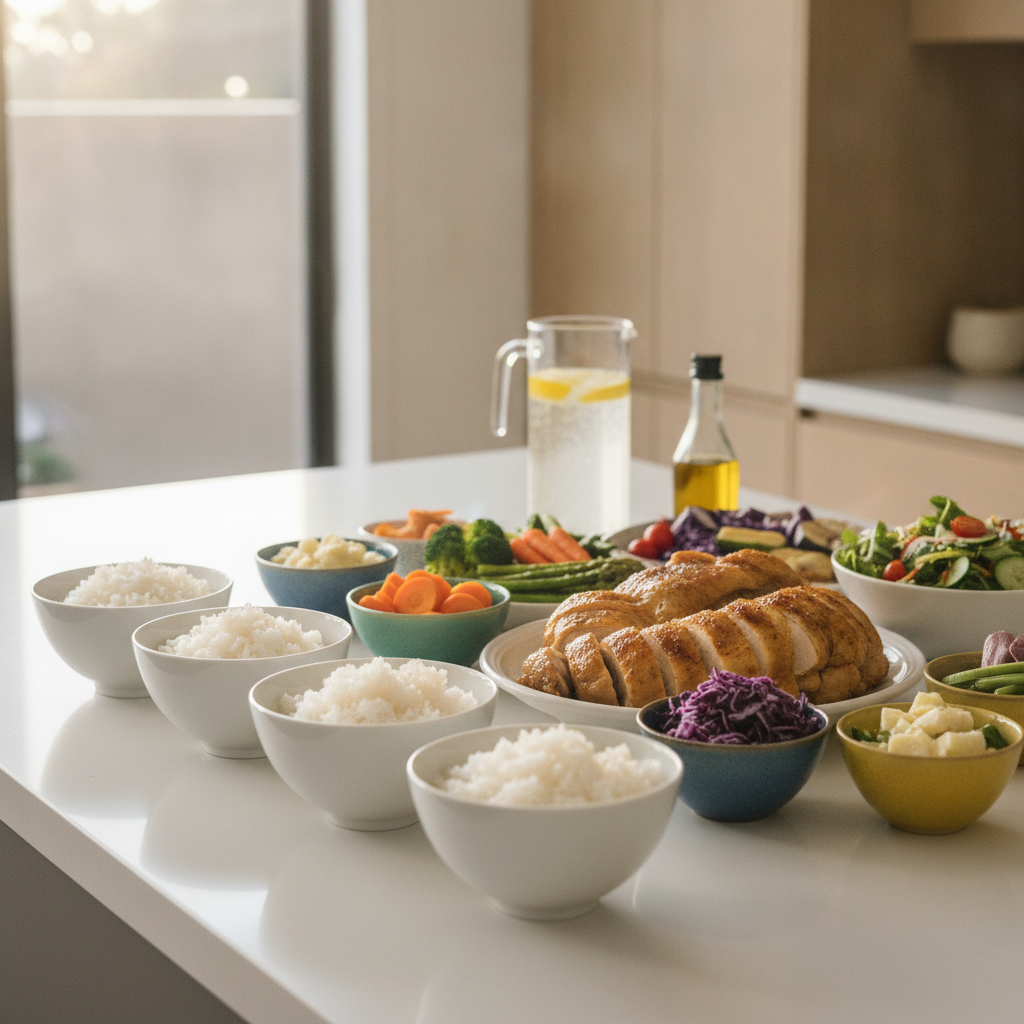
"What's for dinner?" lands differently when you're already at cognitive capacity.
For most families, one person carries the dinner job: deciding what to make, checking what's in the fridge, accounting for who will and won't eat what, building the grocery list so the ingredients exist. It's a recurring planning task that never ends. Every Monday it resets to zero.
That job is already a lot. For an ADHD brain, it's compounded. Family dinner planning requires initiating an open-ended, self-directed task, the exact kind of task executive function regularly bounces off. It also requires holding multiple constraints in working memory at once: picky eaters, pantry inventory, prep time, who has practice tonight. The "just figure out dinner for the week" prompt has no obvious starting point. When there's no structure to latch onto, the easiest move is not starting. So you don't, and by Tuesday it's pizza delivery again.
This is not a willpower situation. The task structure doesn't match how your brain works.
Why the blank slate is the specific problem
Most dinner planning advice assumes the hard part is finding new recipes. It isn't. The hard part is initiating the whole sequence from nothing.
If you're the household's default meal planner and you also have ADHD, you're sitting with a mental model of everyone's food preferences, whatever's already in the kitchen, and a rolling sense of how many consecutive nights you've served tacos. That's a lot of information to hold, and none of it has anywhere to live except in your head. So when it's time to actually plan, you're starting from scratch with a full working memory and no scaffold.
The blank slate isn't just annoying. For an ADHD brain, it's a genuine execution block. Structured prompts work; open-ended ones don't. "Pick five dinners from this list that already fit your family" is a completable task. "Figure out dinner for the week" is not.
What actually helps for ADHD family dinners
A few things that tend to work, based on how ADHD brains process recurring tasks:
Keep a short approved list of anchor meals, maybe six to eight dinners the whole family will reliably eat. Not creative ones. Boring is fine. These are your fallbacks when the day collapses and you need something in the oven without making any decisions. Tacos, sheet pan chicken, pasta with red sauce, quesadillas. Know them well enough to make them without looking anything up.
Introduce new meals slowly, one per week at most. Every new meal adds planning overhead: finding the recipe, checking for missing ingredients, figuring out whether the kids will eat it. That overhead is real. Keeping the rotation mostly stable means the planning job stays predictable.
Build the grocery list from the actual recipes, not from memory. This is where the "forgot the one thing I definitely needed" problem comes from. If the list is generated from what you're actually planning to cook, that specific failure mode disappears.
Use the slow cooker more than you think you should. A meal you start in the morning doesn't depend on having executive function at 5pm. It's already done. Sheet pan meals, things that reheat well, and baked dishes that go in and cook themselves are all in the same category: they tolerate a chaotic afternoon.
The real problem is that it resets every week
None of those strategies fully solve the bigger issue, which is that family dinner planning isn't a one-time setup. It happens again next week. And the week after. An ADHD brain that does well with external structure often falls apart the moment the structure has to be self-generated, repeatedly, indefinitely.
That's where having the planning live somewhere outside your head changes things. Eatsë is built around that: it suggests meals already matched to your household's preferences and constraints, builds the grocery list from what you're actually planning to cook, and remembers what went well. You're picking from a short list, not starting from a blank page. The structure holds up week to week without you having to rebuild it.
For the ADHD angle specifically, ADHD and meal planning goes deeper on how the structure piece works. If you're looking for recipe ideas that keep prep complexity low, ADHD-friendly meals has a curated list. And for the family management side, the family meal planner app overview covers how the household coordination layer works in practice.
Two weeks free. Then dinner's figured out.
Stop deciding what's for dinner.
Eatsë is free on the App Store. It plans the week, scales every recipe to your house, and builds the grocery list by aisle.
Download Eatsë free
Two weeks free. Cancel anytime.