
What is a meal planning app (and when does one actually help)?
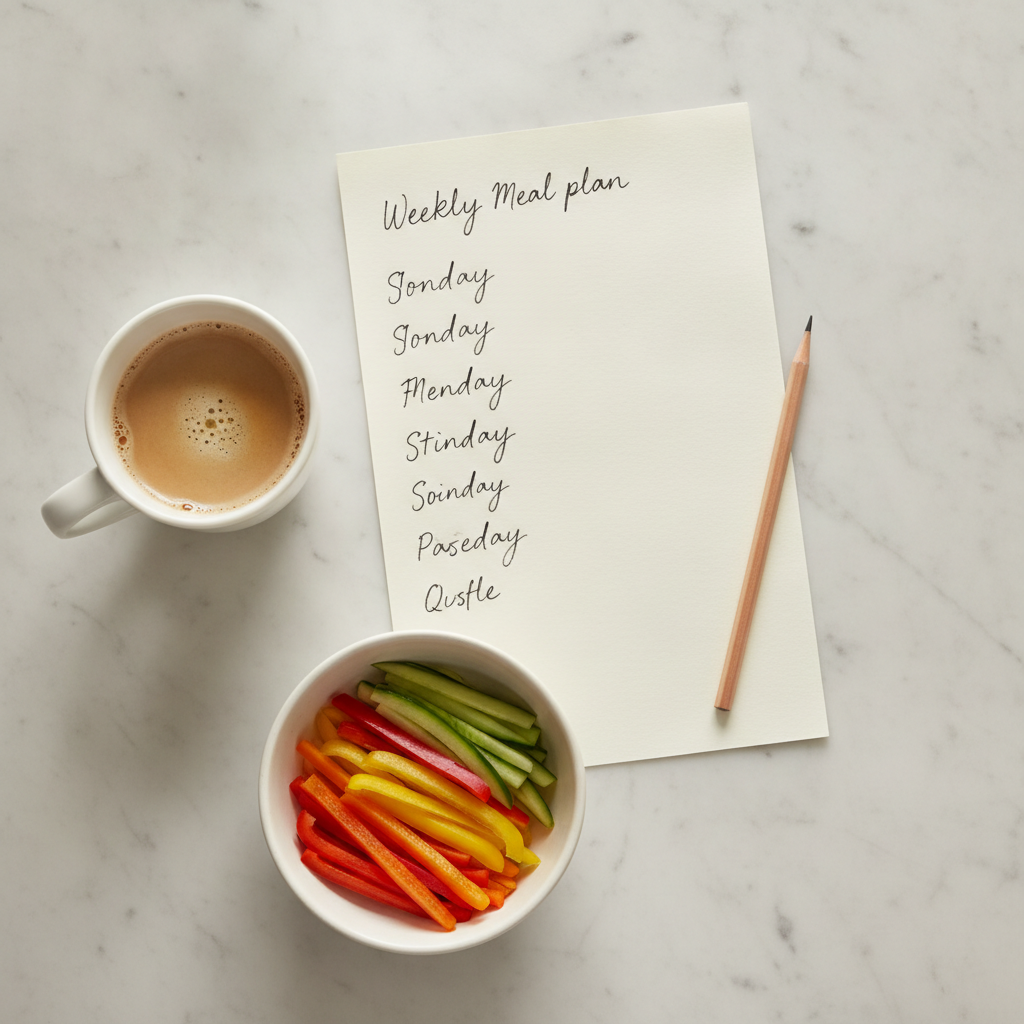
A meal planning app takes some version of the "what are we eating this week" question and compresses the work. At minimum: recipes and a grocery list. At best: a plan that already accounts for your household size, your dietary restrictions, and the time you actually have, so you're not starting from scratch every Sunday night.
That's the elevator pitch. Whether it delivers depends on what the app considers the job.
What the job actually is
The full task breaks into four steps:
- Decide what to eat this week
- Find or organize the recipes
- Scale them to your household
- Build the grocery list
Most people already do this. They do it slowly, scattered across browser tabs, mental notes, and a half-remembered note on the fridge. A meal planning app that works compresses those four steps into one workflow. A meal planning app that doesn't work gives you a digital recipe box that still requires you to figure out steps one through four on your own.
The confusion between recipe apps and meal planning apps
These two categories get sold as the same thing, which is where most of the disappointment comes from.
Recipe apps are about discovery. They hold a large library, let you save favorites, and filter by ingredient or diet. Yummly was the largest example of this format before it shut down, stranding millions of saved recipes. Great for browsing. Not a plan.
Meal planning apps are about execution. The goal is a specific week of dinners and one accurate grocery list.
Most apps live somewhere in the middle. They give you recipes and a way to add them to a "meal plan," but the actual planning is still on you. Dragging recipes into calendar slots and then combining five ingredient lists by hand isn't the mental load removed. It's the mental load reorganized.
When a meal planning app actually helps
It helps when the bottleneck is the decision-and-setup work before cooking, not the cooking itself.
If you're spending 30 minutes every week figuring out what to make, cross-referencing the fridge, filtering for dietary restrictions, scaling recipes, and manually building a grocery list, a good app can compress that to 5 minutes. Not because it does the cooking. Because it handles the front-end of the job.
For families, the barrier is usually constraint coordination: one person doesn't eat this, someone's gluten-free, nothing too spicy for the kids. Getting a plan that works for everyone is where the time goes. An app that plans around those constraints automatically saves something real. There's more on this in our guide to the best meal planning app for families.
For people with ADHD or anyone who struggles to initiate open-ended tasks, the structure matters more than the recipes. "Figure out food this week" is vague and hard to start. An app that narrows it to "pick from these five meals that already fit your week" changes the task from a blank page to a short choice. That's a meaningful difference.
It does not help much if the actual bottleneck is motivation to cook, budget management, or finding recipes that work for a highly specific set of dietary needs. No app solves the motivation problem by existing on your phone.
What to look for before downloading
If you're comparing options, our roundup of the best meal planning apps goes deeper. A few things that separate apps that reduce work from apps that shift it:
Does it scale recipes to your actual serving count? If not, you're doing the math at the store.
Does it build one combined grocery list from the full week's plan? Or does it generate a list per recipe and leave you to merge them?
Does it let you set permanent restrictions? Dietary avoidances shouldn't require re-entering every week.
Does it plan for your household size, including half-serving adjustments? One person cooking is a different product than a family of five.
Does it give you agency over the final plan? There's a meaningful difference between an app that suggests meals you choose from and one that generates a plan and expects you to follow it. Most people want to stay in the loop on what goes on the table.
What Eatsë does
Eatsë works from a suggest-not-decide approach. It narrows the week's possibilities to a short list of meals that fit your household size, your avoidances, and the time you have on a given night. You pick from that short list. It scales the recipes, builds the grocery list, and organizes it by store section.
The point isn't to remove the decision. It's to make it fast and obvious, because the hunting and vetting have already happened.
Two weeks free at greydoglabs.com/eatse.
Stop deciding what's for dinner.
Eatsë is free on the App Store. It plans the week, scales every recipe to your house, and builds the grocery list by aisle.
Download Eatsë free
Two weeks free. Cancel anytime.