FC-1
Single-SKU palletizing
30cases/min, max
One SKU, one pattern, full speed. Column or interlock stacks off a single case packer: beverage, canned goods, bagged product.
- Lines in
- 1–2
- Pallet stations
- 1 or 2
- Changeover
- Recipe select, under 60 s
Fictional company · demonstration
Palletizing + depal · Greenville, SC
We design, build, and commission robot cells for grocery DCs, beverage plants, and 3PLs across the Southeast. 22 cases/min on mixed pallets, up to 30 on single-SKU lines, and 140 cells running since 2012.
The problem
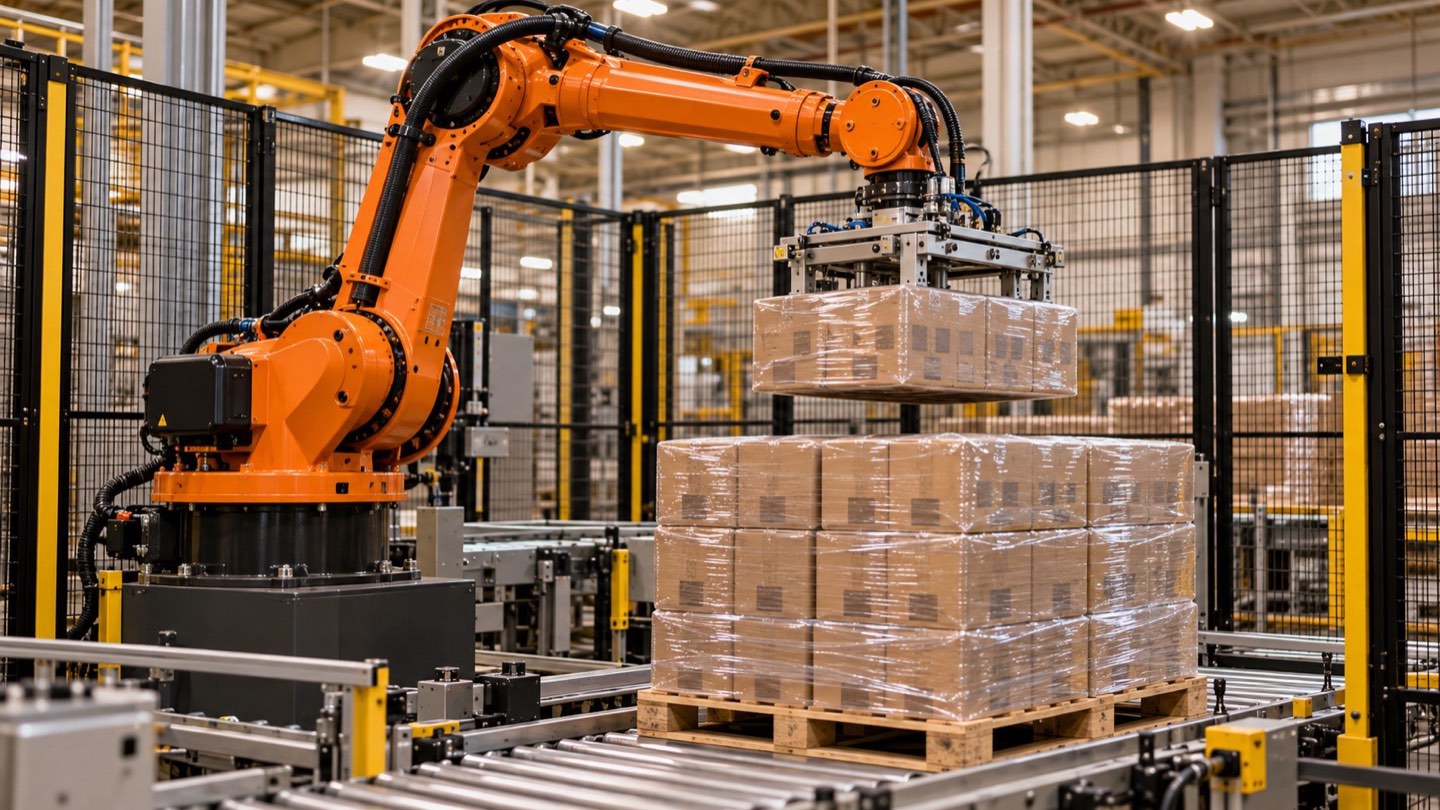
The 52 lb jug case. The tray that crushes. The shrink bundle that won’t hold vacuum. Most cells get quoted on the average SKU and stall on the edges. We start with the edges.
52lb
Heaviest case on the last grocery line we quoted. The gripper was sized for it, not the 18 lb average.
4hr
Minimum run at rate, on your cases, in our Greenville shop before any cell ships.
99.4%
Median availability across our installed cells in their first year of production.
Pattern builder · FC-2
Ten cases a layer in a two-way interlock. Odd layers run one way and even layers turn 180°, so no seam runs top to bottom. A slip sheet goes down between every layer. This is the pattern we’d run on a 16 × 12 × 8 in grocery case at 22 cases/min.
Orange is the case in the gripper. Pick order runs back to front, so the tool never reaches over a case it already placed.
Mixed-case palletizer · two pallet stations
Cells
Every cell ships with the same controls, guarding, and remote support. What changes is the gripper, the vision, and how many SKUs it has to handle.
FC-1
30cases/min, max
One SKU, one pattern, full speed. Column or interlock stacks off a single case packer: beverage, canned goods, bagged product.
FC-2
22cases/min, mixed
Store-ready mixed pallets from a WMS order feed. Heavy on the bottom, crush rules per SKU, and every pattern tested before the cell ships.
FC-D
15cases/min, mixed inbound
A 3D camera finds case edges on mixed inbound pallets, shrink-wrapped and slip-sheeted layers included, and picks to one case line.
We size the cell around your worst SKU, not your average one.
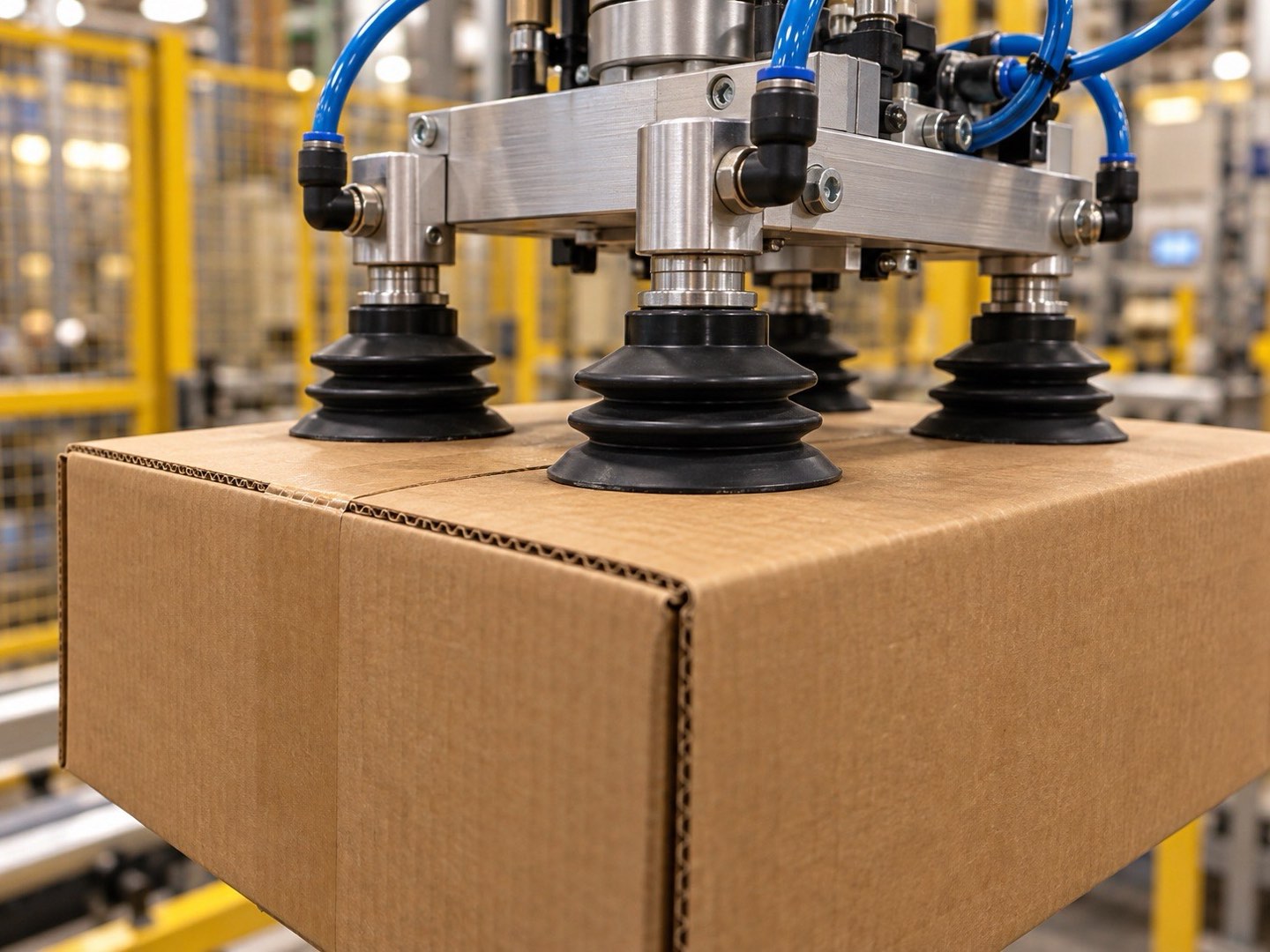
The heaviest, softest, and slipperiest cases go on the actual tool before the layout is drawn. Send us 3 of each.
Crush limits, label-out orientation, and heavy-on-bottom rules live in the pattern library, not in an operator’s head.
Zero-pressure accumulation and case turning ahead of the robot, sized so a 2-minute stop at the wrapper doesn’t stop your packer.
Empty-pallet dispenser, slip-sheet magazine, and full-pallet discharge. Operators swap loads without entering the cell.
Fence, interlocked doors, and light curtains at the pallet exits. The robot keeps building on station 2 while station 1 is unloaded.
FAT at rate, on your cases, in our Greenville shop. Your team signs off before we break the cell down for the truck.
Projects
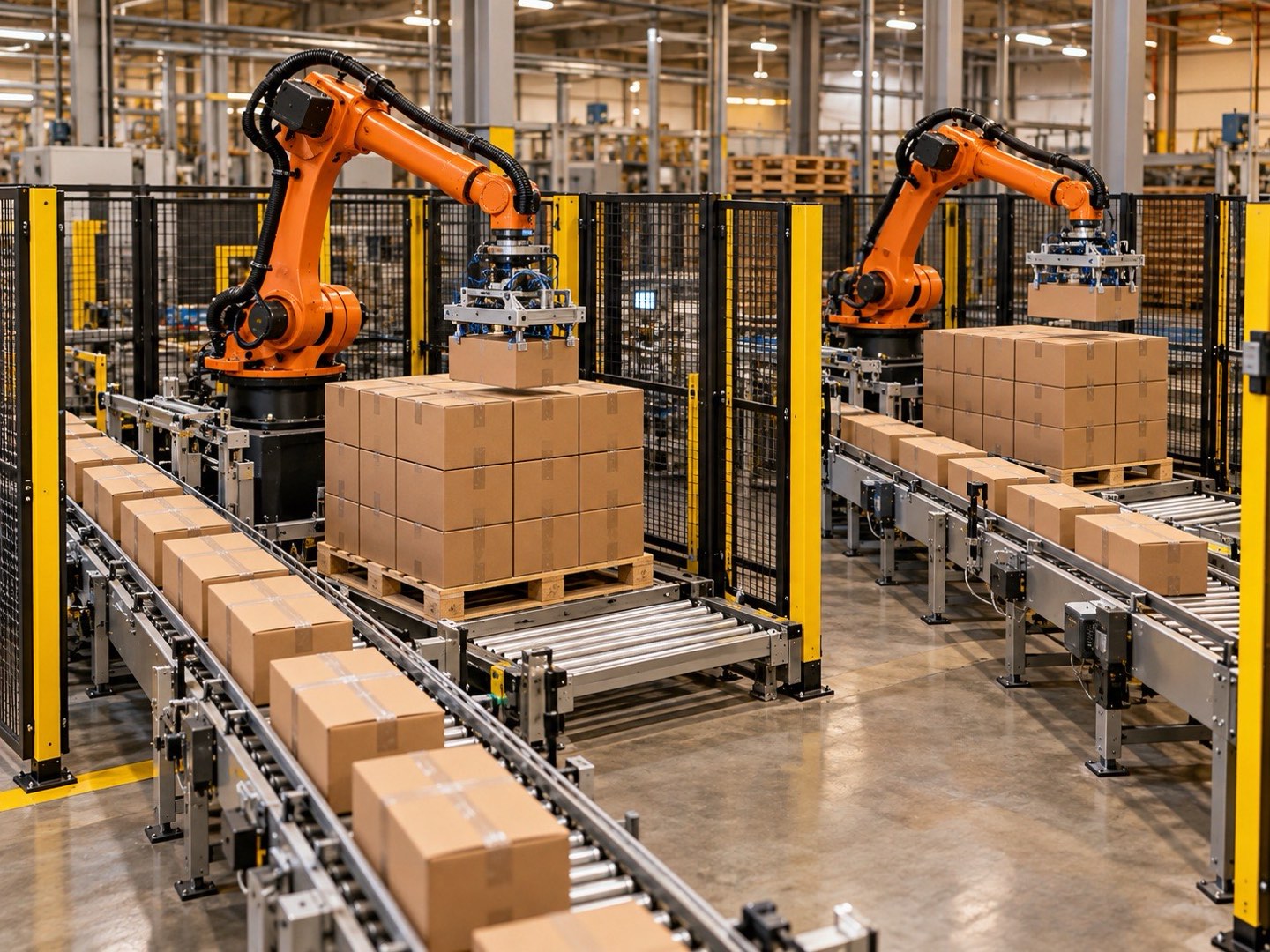
Illustrative project · fictional
Two cells share one infeed and a 340-SKU pattern library fed by the DC’s WMS. Jug cases, crushable trays, and shrink bundles were tested on the gripper in Greenville before the layout was frozen.
Illustrative project · fictional
Inbound pallets arrive mixed, wrapped, and slip-sheeted, and no two are alike. An FC-D cell finds case edges with a 3D camera and picks to one case line feeding decant. Nobody climbs a pallet anymore.
Industries
Six kinds of end of line, each with its own worst case.
Mixed-carton depal ahead of induction. Cartons from 2 to 60 lb, no two pallets alike.
Store-ready mixed pallets. Heavy on the bottom, crush rules on every SKU.
Light, soft-sided cartons. Gripper zones sized for tops that give.
Pattern libraries that change with every client. New SKU to tested pattern in 48 hours.
Label-out on every case, and pallet records passed back to the WMS.
Shrink bundles and trays at up to 30 cases/min on single-SKU lines.
Start here
Tell us the case, the rate, and the pallet. An applications engineer replies with questions or a first layout, usually within two business days.
Demonstration form. Nothing you enter is sent or stored. Submitting opens a preview of what the team would receive.